Honey, I shrunk the… story!
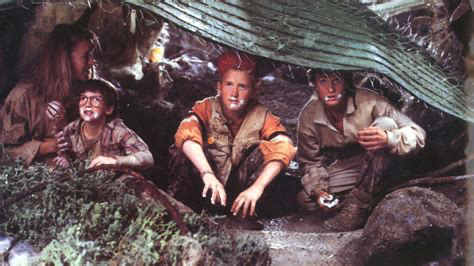
In 1989, a movie came out called Honey, I Shrunk The Kids.
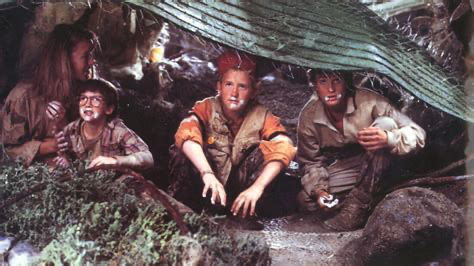
Maybe you remember it. A failed inventor, played by Rick Moranis, accidentally creates a shrink ray, and unbeknownst to him, the ray miniaturizes his kids, along with the neighbours’. The teeny tiny youngsters are unknowingly taken out with the trash, and spend the entire movie traversing the wilderness of their own backyard, trying to get back home.
I loved this movie. What I remember most about it is the change in perspective. From the kids’ vantage point as a quarter of an inch tall, the most benign things are transformed into significant obstacles. Rain drops are like tidal waves. Ants are like dinosaurs. Bee pollen is a minefield for the poor allergic kid. On the other hand, an abandoned Oreo cookie appears to be a true mountain of dessert — yum!
The movie popped into my head the other day while I was sitting in my garden noticing the small but vibrant life going on around me. Look closely at a wildflower patch or even the garden’s grass and you’ll start to see just how much life is actually happening. It can take an ordinary moment from banal to transfixing.
And that brings me to storytelling. It can be easy to skip over the details, especially in professional communications or non-fiction in general. But by deliberately including some key sensory details you can engage your readers/listeners, bringing your story to life and helping them feel it (and remember it!) in a much deeper way.
If you want to try this, here’s a simple method. First, write the story as you normally would, striving to get the basic points down. Now, re-read it and look for places to add in a little more detail.
This is especially useful when writing about an event or situation. (Keep in mind, it can often be useful to “shrink” a big idea down to a specific situation. For example, suppose you’re writing about a concept you want others to learn. Go back in time to a moment you learned that big idea or put it into practice. Tell that story. It will help you illustrate your point in a much more engaging way!)
When considering what to include, look for details that will engage the senses: those related to what you could see, smell, feel, touch, taste, hear, etc.
For example, think back to the situation or event you’re referencing. What was the weather like that day? Was it overcast and rainy that morning? Or was it a stinking hot night in the city?
How did you feel physically? Were your hands cold and chapped from the winter weather? Was your heart racing and your palms sweating from nervous energy?
If you were with someone else, what was their demeanor? Did they stand there, looking blankly at you with their hands in their pockets? Were they in the crowd with their hands raised, cheering you on?
As you write, keep in mind that you usually don’t need all the details. Overdo it, and you’ll take away from the pacing — and likely, the point — of your story. But you can always choose to scale things back when editing.
A final piece of advice on this: Sometimes, the truth is we don’t remember (or can’t know for certain) exactly what was going on around us at a specific moment in time. You might remember that you were wearing your lucky red sweatshirt on that fateful day… or you might have no clue what you wore, or even what month it was. While we want to stay as close to the truth of an idea as possible, it’s also usually okay to add in a little colour and flavour, using your best guess. There’s a difference between saying that you ate cereal for breakfast this morning (when you might have had a bagel), and fabricating crucial details (as with the famous case of A Million Little Pieces.)
My point, of course, is to consider your story closely. Shrink your vision, think back, do some research, and take your best guess at some of the details that could bring your story to life. Do this in service of your reader and giving them an authentic taste of what you experienced (not trying to make yourself look better or more remarkable) and you’ll be on the right track.
Meanwhile, why not practice getting up-close-and-personal with the world around you? Observe the little things. Take note of your senses as you experience them. Better yet, write them down. You’ll be a better storyteller for it.