Why you shouldn’t get too comfortable with your writing
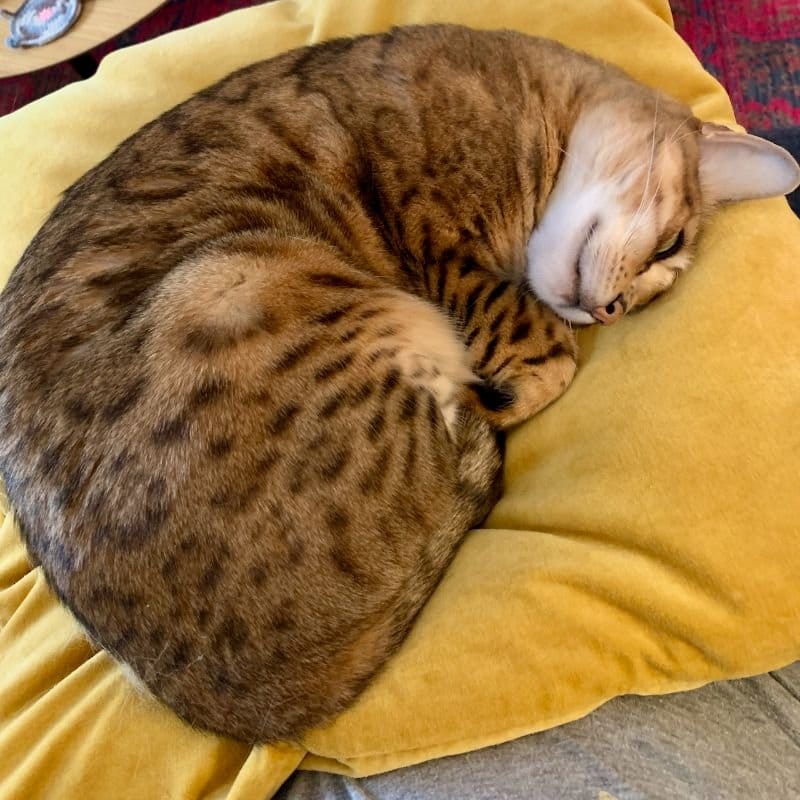
I am writing this from a very awkward position (literally).
There is a cat sitting on me. Her dominant placement on my lap has forced my laptop off to the side, causing me to type at a strange and uncomfortable angle.
If you have a cat, you know this position. You also know that you cannot move when there is a cat on your lap, no matter how much work there is to be done. That is the law.
[caption id="" align="alignnone" width="800"]
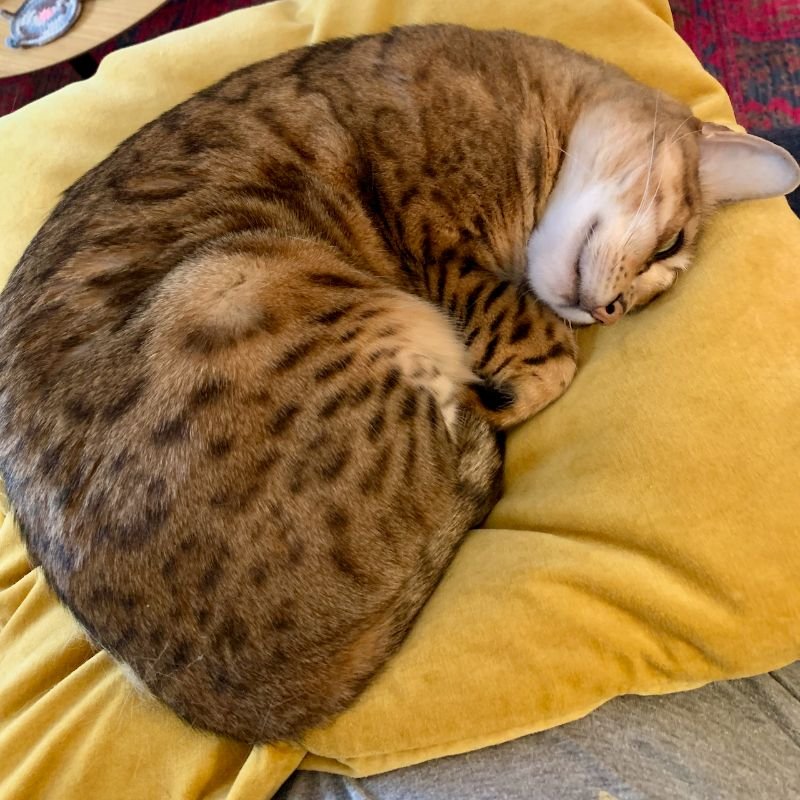
My cat, Iggy, stealing my lap and taking over my newsletter [/caption]
I have always loved cats. Case in point: In sixth grade I was assigned a project in social studies about The Sphinx. I recall putting considerable work into the project before it dawned on me that the topic was not referring to the cat breed, but rather to the Great Sphinx of Giza.
The fact that we were studying Ancient Egypt at the time *should* have made this obvious. But, my familiarity and delight with feline subject matter overpowered my objectivity. I heard “Sphinx” and immediately pictured those funny looking (but nonetheless charming) hairless cats.
Can you guess what I’m trying to tell you with this story?
When we get locked into seeing things from one point of view — our own — it can be incredibly difficult to see things from a different perspective.
I often emphasize the importance of empathy and considering your audience when you write.
But the truth is: it’s hard to do. No matter how naturally empathetic or considerate you are, we are naturally biased towards our experiences, preferences, and desires.
So, as storytellers, it’s our job to keep peeling back these layers of assumption and familiarity.
It’s our job to imagine (and reimagine) things from another point of view.
This means we have to keep coming back to these fundamental questions:
What does my audience need? What are they feeling right now? What are they struggling with? What do they care about? What is hard for them? What will help them feel seen? What will help them the most?
And so on.
I mentioned in my last post that this is a lifelong practice, and it is. The job is never really done.
Every time we get a bit too comfortable with our own subject matter, our own perspective, we need to challenge ourselves once more to look again. Go deeper. Reimagine things from another point of view.
And, if you can, try doing it with a cat on your lap. Kitty cuddles might not make you a more efficient writer, but cats make everything better... at least, that’s what I think. ;)