How To Write An Email That WON’T End Up In The Trash

First of all, thank you to everyone who responded to my personal letter about the loss of my friend Dean. Your support and kindness means so much to me.
Today’s story is back to business and much less personal (though it is something I’m super passionate about.)
The subject is: e-newsletters!
For years I resisted starting an email newsletter. I’m soooo glad I finally got past that lol. (Read the story about it here: www.camilledeputter.com/blog/ignore)
Email continues to be a highly effective form of communicating, building your audience, articulating and testing your ideas, and building a body of work… IF you do it right.
If you’re reading this, I’m guessing you:
❌ DON’T want to “add to the noise” or become just another “junk box” email
✔️ DO want to make sure your emails are actually read and appreciated by your recipients
❌ DON’T want to come off as salesly or slimy
✔️ DO want to engage authentically with your audience
So, how do you make that happen? Here are some tips I’ve learned over the years in the communications biz.
1) Be a human being. 🤖
Don’t want to come off like a slimy salesperson or a content-writing robot?
Then don’t write like one.
Think about it: when you get an email from an actual human being, you’re far more likely to read it and respond to it, right?
So, don’t try to be perfect or turn your emails into slick sales pitches. Just be you.
You can use your email to tell personal stories, give your audience genuine updates from your life and work, and express your point of view. Bring your readers along in your journey as you learn and grow. Don’t worry too much about getting everything perfect, because it’s often the humanness that works best.
Case in point: one of my clients generated millions of dollars in potential funding in just a few emails, simply by sharing his thoughts and reflections in an honest and real way. Honestly, it continues to amaze me how effective it can be to just show up and communicate as a human being.
I can also tell you that my personal emails — rather than my informative ones — tend to generate the most engagement. Another reason to write from the heart!
2) Strive to provide value. 💡
What do you think your audience wants and needs? What would help them today?
Is it an answer to a question they’ve been grappling with? A tool or system that will make their life easier? Or just some encouragement or support?
We’ll never get this perfect, but we can use our empathy and imagination (and well as some data) to keep getting better at it.
(That’s what I’m trying to do with this email. Am I on the right track?)
3) Put the value IN the email. 🎁
Your readers should be able to find value in your email without clicking on a thing.
If you want to send people to something on your website (such as a free download, an event listing, etc.) that’s fine — but as much to provide, aim to provide something of value within the email content itself.
Linking out to your blog feels like a cheap way to get people to go to your website, and today’s readers are too smart (and too busy) to bother.
4) Give, give, give, then ask. 🤝🏾
Speaking of value, if you’re just selling stuff all the time, your readers are likely to bail.
Spend time giving your readers things you think they’ll like. Maybe that’s inspiration, ideas, or knowledge. Maybe it’s entertainment or fun. Maybe it’s just a personal note from another human being. Whatever it is, make it for them.
This doesn’t mean you can’t sell. (And, in truth, by providing value you are selling, just in a more subtle way.) Once in a while — for example, if you have a launch coming up, or an event, or a new product on the market — you can invite people to buy from you.
But if all your emails are trying to persuade your readers to buy from you, you’re likely headed for a lot of unsubscribes.
5) Treat your readers like people, not “a list”. 🌎
We live in a world obsessed with “audiences”, “followings”, and “lists” — as in, “how many followers do you have?”, “how many people are on your list?”, “how big is your audience?”
UGH.
Yes, I get it — we all want to reach more people. But the irony is, if you’re obsessed with reaching MORE people, you might be ignoring the ones you have.
If you’re too busy bemoaning the fact that you don’t have 10,000 or 100,000 followers, you’re missing an opportunity to care for and connect with the people you do have in your network.
Storytelling is a two-way street. Your people are not “followers”. You don’t acquire them like coins in a game of Mario or cherries in a game of Pac Man. They’re people. They’re readers, thinkers, and human beings, just like you.
Strive to communicate, learn, and connect.
You can absolutely grow your list, but first you must appreciate and serve the people who are already there. One person at a time.
6) Do your own thing and have fun. 👯
When someone is having fun and enjoying something, we’re far more likely to enjoy it too, don’t you think?
Creating content can take work, but if you hate the process and feel like you have to squeeze yourself into a box and do everything “right” then what’s the point?
Luckily, you can come up with a writing process you enjoy. And you can tell stories all kinds of ways. For example, your emails can include video or audio. You can write checklists and tip sheets or toolkits or downloadable workbooks. You can share personal updates, excerpts from your published material, or heck, pictures of your cat.
Plus, you don’t have to go it alone. You can collaborate with friends, like I did with this art project and this comic. (And of course, you can hire me to help you write and publish regularly, and more effectively.)
You might need to just ignore what everyone else is doing. And do it your way.
7) Show up consistently without going overboard. 🌊
A while ago, I took part in a seminar where hundreds of participants were asked to consider what makes an email “junk”.
Can you guess the #1 thing people said?
TOO MANY EMAILS.
Some people can get away with daily emails. But most of the time, that’s probably more emails than your audience wants to receive.
Lots of readers (like me) are lazy and won’t necessarily hit unsubscribe, even if they don’t always open your emails. But if you email them too much, you’ll force their hand and they’ll have to ditch you.
So, aim to find a cadence that you can commit to AND that will best serve your audience. That might be once a week, once every two weeks, once a month, or even quarterly.
Whatever you choose, stay consistent. Just as too many emails are probably unwanted, sporadic emails will leave your audience wondering: “what the heck? Did I subscribe to this?”.
For email to work over the long term, you must pick a reasonable rhythm, and stick with it.
This is so easy, right??? Piece of cake? 🍰
As Wayne Campbell would say… NOT.
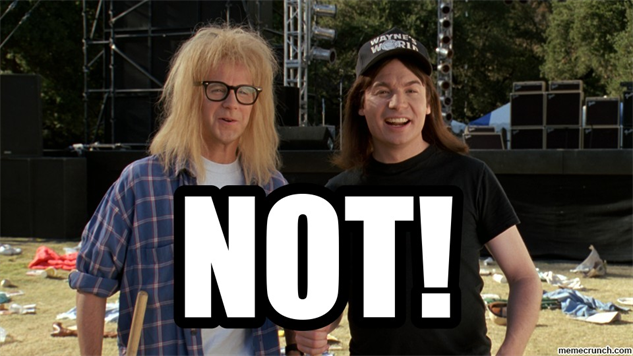
I’ve been writing an email newsletter every two weeks by myself without skipping a beat since 2016. (And I help my clients do the same.)
But I’ve finally figured out that I’m an anomaly. Throughout these years, I’ve watched sooooo many people start, then stop. (And then maybe start and stop again.) They struggle to write, fail to show up consistently, and generally drive themselves — and their audience — nuts in the process.
It’s especially hard for independent professionals (like freelancers, coaches, artists, makers, writers, and other solo folks who do it all themselves.) ← I’m right there with you, my friends!
So, heads up — If this is something you’d like help with, I’ve created a workshop just for you:
Introducing the DONE-IN-A-DAY EMAIL NEWSLETTER WORKSHOP.
An Interactive Virtual Workshop on October 28, 2022
In this workshop, we will work through all the essential steps of creating a strategic, successful email newsletter that represents YOU and your brand.
By the end of this one-day workshop you’ll know exactly:
- What to write about
- How often you should write / publish your newsletter
- How to choose your best ideas, and which topics to focus on
- How to stay consistent and prevent yourself from falling off
- How to repurpose your content for social media and other platforms
- How to use your e-newsletter to sell more products and services
- What to measure and how to tell if your newsletter is working
- And more!
Better still, you won’t just KNOW the answers to these questions, you’ll already be putting them into practice. This is a workshop, which means we’ll actually work together.
By the end of the day, you won’t just know what to do.
You’ll already be doing it.
🌟 To learn more and sign up, check out the details here: www.camilledeputter.com/workshop